
morechildsurgeries is not just a charity, it's an impact system to
Increase the number of extremely poor children receiving a life-changing surgery
Improve the safety whilst reducing the cost per child whilst supporting a sustainable health network
Build trust between donors, medical teams, and community based / hospital health workers so single successes repeat and scale
2022 Mariam


2026 Mariam

How the Impact System Works
Step 1 — Identify Child via community outreach
Step 2 — Confirm Diagnosis
Step 3 — Source Funding
Step 4 — Deliver Surgery Locally
Step 5 — Verify Publicly (Proof of Care) – via 2/3 video system
Step 6 — Follow-Up / Review Quality
Background
Millions of children in underserved regions lack access to safe, timely surgery, leading to preventable disability and death. Conditions routinely treatable elsewhere become life-threatening due to cost, distance, and limited care. Expanding surgical access and strengthening local health systems can deliver life-changing outcomes for children and families worldwide..
Source: Lancet Commission on Global Surgery 2030 Dr John Meara Harvard University - Professor Andrew Leather of King’s College London
From what I’ve seen across eight family visits to Africa over the past decade, the problems and the opportunities are very real.
It starts with a single child who needs surgery. When that child is properly connected; family informed and supported, a local community health worker engaged, a capable surgeon aligned, and a donor funding the outcome -you create something powerful. Not theoretical. Real. Repeatable.More than the surgery itself.
What stands out to me is how quickly one surgery becomes more than one outcome. Yes, it changes that child’s life—often completely. But it also strengthens the local hospital, supports and retains skilled surgeons, and creates meaningful work for nurses and community health workers. Skills improve. Confidence builds. Standards lift.
I’ve seen the long term impact on families. When a child recovers, parents can return to work, siblings return to school, and the whole household stabilises. That ripple effect is significant—and it compounds over time across communities.
The big picture is this: simple, well-connected action at the individual level can drive system-level change. Done properly, this model doesn’t just deliver surgeries—it builds local capability, supports economic participation, and strengthens health systems from within.
That’s what gives me confidence. It’s not complex in theory—it just requires some care, alignment, and persistence to do it well.
Model (Simple)
The morechildsurgeries model is individual child surgical outcome via community health worker connected directly to donor/funder connected directly to doctor in a transparent, verifiable, public process that completes, reviews, scales.
Currently 3 Videos, WhatsApp Groups, Google Sheets, Bank Transfers, Receipts = 1500 surgeries
Aiming to grow to 1000 surgeries in 1000 hhospitals under $1000USD each on a yearly basis via WhatsApp Groups, 3 Videos, Proof of Care Stable Coin = a better world
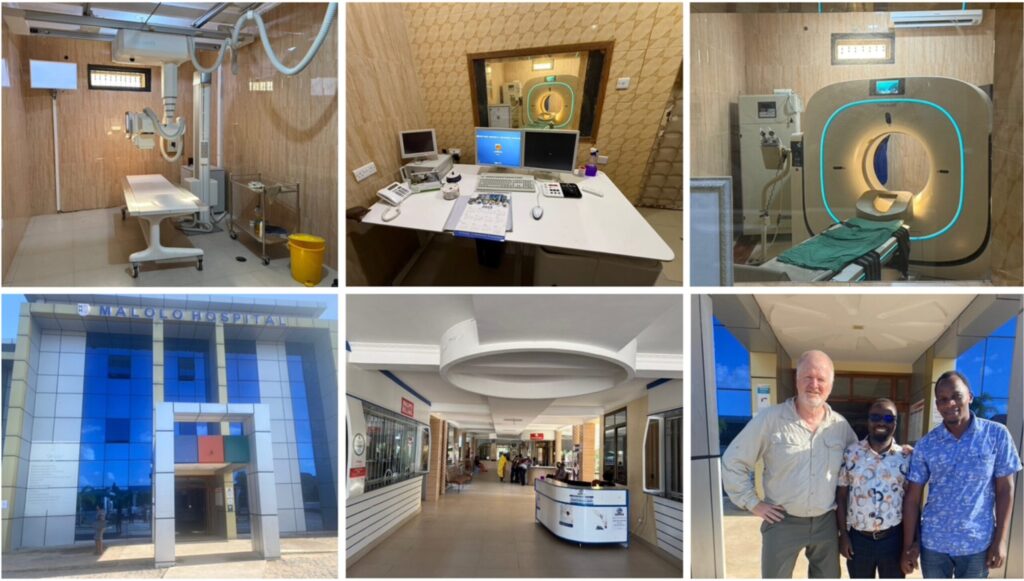
Yeah But Why?
There are conversations I find myself in more often than people might expect when talking about overseas giving.
“Isn’t there corruption?” Yes. “Does the money get there?” Not always. “Shouldn’t we fix home first?” Fair point.
I agree with all of it. I’ve seen the waste, the lies, the inefficiency — up close, some of it with my money and not all of it was in my country Australia, in America, some of it was in Africa. These aren’t abstract concerns.
The question isn’t whether the risks are real — they are. It’s what we do with that reality.
Like businesses, some charities are a money pit, and for others, a dollar targeted into the right place will make a huge difference, have a magnificent multiplier effect of innovation, excitement and goodness on so many.
For me, it’s never been about proving that any single giving is 100% perfectly efficient or universally successful – its a journey of learning and I just keep going.
Today all our life expectancies are double what they were two hundred years ago. That didn’t happen by not doing, as the previous millennia proves. Around the time of the industrial revolution, people acted via imperfect systems with uncertain outcomes. They acted anyway and stuff worked.
Well, it worked for me, how about you? I think I’d rather 84 years of relative happiness than 31 years of chronic toothache, hunger and maybe syphilis.
So here’s my question back: not doing avoids many negatives, but how does not doing get anything done?
If you are having a relatively good life…its in part because others have helped you…or you would be with chronic toothache, malaria and past it by 30.
Next.
Front of mind is foreign aid waste – thats the new headlines. Countries are pulling back. I get the arguments closer to home.
The Western world has its own challenges. The United States, for example, spends more on healthcare than any country in the world — lots more — yet 60 countries outperform the US on life expectancy. So yes, work to do, but is it more money? In Australia we spend 250 times more per person on healthcare than in Tanzania so is your money closer to home a game changer…we are 5 years of life expectancy better off than the US and in the Top 10. Maybe. I don’t know.
What is the right answer …. are we part of a tribe, a country or a world?
Have you travelled much — not the hotels in the middle of rich cities (which are all in a like in the middle…there’s a message of same same), I mean really travelled?
Here’s what it seems to me: someone born into the poorest conditions, given your income, wants almost exactly what you want. Their life would look remarkably familiar with the same $ as you: a safe home, a proper bed, a clean toilet, good food, music they enjoy, even the same brands and comforts. Coke, anyone? We are far more alike than we are different.
The gap now isn’t really chromosomes or hormones or brain cells – at the most basic levels of existence, it’s money.
Until you have enough food and water, security, education and basic healthcare, its money… you need more money.
More money for you and me is largely circumstance, that is when you are born. Luck.
I’ve been lucky.
I also want to keep making my own luck for me and my family. Maybe you don’t agree, but I’ve found that building happiness comes more from sharing than hoarding. Money is a great thing — love it — but it has its limitations as American healthcare shows, as it also has in my hands, beyond the basics.
So using the extra $, to be involved beyond our immediate circle, has done more than help others. It has helped me. I’ve learned a lot. It has helped my family, my children. Our perspective, mental health, and our resilience in and to the world — all have improved through our involvement in directly helping others overseas.
It may sound corny, but you get more than you give. I never believed/experienced that until I had done it with some focus on quality of giving.
Next its overwhelming?
Problems of children in war or the sheer numbers? Overwhelming….. yes sometimes…. like life is sometimes.
I find comfort in the now and the personal — helping one individual, I can see a way forward, feeling a connection.
Like our ancestors, I can’t get it all done in my lifetime, but I can be involved in helping pay it forward. That’s how I limit feeling overwhelmed…I become just part of human existence…… most times a wonderful thing.
So why give overseas?
I do what I do because it feels good, and I don’t think there’s a higher reason. I’ve checked all the religious texts, the philosophers’ theories and the podcasters self helping highlights. I do it because it feels good…. for me……personally… and I see a bang for my buck that is harder to find closer to home. That’s what I think. That’s the why for me.
Giving at home makes me feel just as good at times as well….like a great meal, driving a sporty car, kicking the winning goal…giving locally is the same for me.
When I choose to help a child receive surgery, pay part of a health worker’s wage, or give a dollar toward equipment for a developing hospital, I do it with clear eyes. I try to make it count through proof-of-care verification, so I don’t ignore the flaws, I don’t like waste but I understand them as part of the landscape.
A landscape that worked 250 years ago, and one that works now. In Sub-Saharan Africa, life expectancy has doubled in my lifetime. Thirty to sixty. Vaccines. Education. Donations. It’s all working. As child deaths lower so do family sizes (yes true – less population) and education and wealth increases, fewer deaths from wars, less poverty for us all. The world continues to be a better place year on year and I’m happy to be part of it. I do it because it works – it makes a difference.
A child helped today contributes tomorrow – to their family, their community and eventually to mine and yours. Not every time. Not perfectly in a straight line. But often enough for many to keep doing it.
If this resonates with you, that’s great.
If it doesn’t, that’s okay too.
It’s your journey mate.
All I am doing is saying the why for me.
It feels right. It feels good.
This is Rahman. He had a simple surgery paid for - it changed his life.


Scaling Approach
Scaling works only if outcomes improve, costs reduce, and the human connection strengthens. Our model grows by replicating one clear unit: a child, a surgery, and a fully transparent care loop linking donor, doctor, and community worker.
Proven in Tanzania, we now scale through simple, verifiable systems—3 videos, WhatsApp groups, open tracking, and financial clarity—evolving to blockchain-based Proof of Care and stablecoin funding. Every step remains visible, accountable, and human. Growth does not dilute connection—it deepens it, enabling millions of children to receive life-changing surgery with integrity intact.
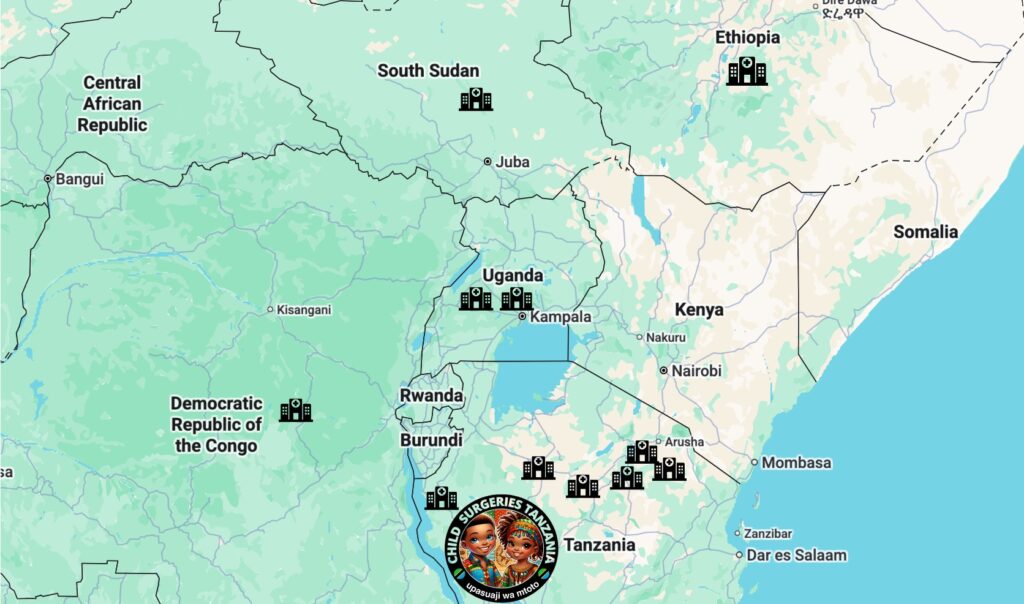
This is where we now sponsor child surgeries on an ongoing basis
Risks and Reality
MoreChildSurgeries operates in complex, real-world environments where outcomes cannot always be perfect. Children may not survive surgery, funds may be misused, and miscommunication can occur. This is the nature of healthcare and aid at scale.
Our focus is not perfection—it is performance through persistence.
Perfection implies no mistakes; in reality, no mistakes occur only when nothing is done.
We manage risk through transparency, verification, and continuous improvement. Proof of Care and ratings provide visibility across every case—enabling early detection, open review, and direct action.
The system is built to:
- Mitigate not eliminate risk
- Detect issues quickly – not run away from them
- Learn and improve continuously – work smarter not harder
By transparency – meaning all can see and be complimentary or critical
Success is measured not by avoiding mistakes, but by reducing them over time—while continuing to deliver life-changing outcomes for more children, with improving results, trust and efficiency.
We are evolving from a successful Tanzanian initiative into a scalable platform for child surgery access – designed to multiply impact without multiplying cost.
Start
- Partner-first
- Program model
Then
- Expand to new countries
Later
- Only create local NGOs if needed
- Never commit to large infrastructure
Goal:
- Maximise children helped per dollar
- Maintain tight governance + strong local delivery
- Create a model donors/medical teams can confidently scale into
This is Lobikieki. He was dying. No options. Surgery. 5 years on alive.

2023 Lobikieki's follow up
2025 catch up in Arusha

2026 to school first time

2026 to school first time
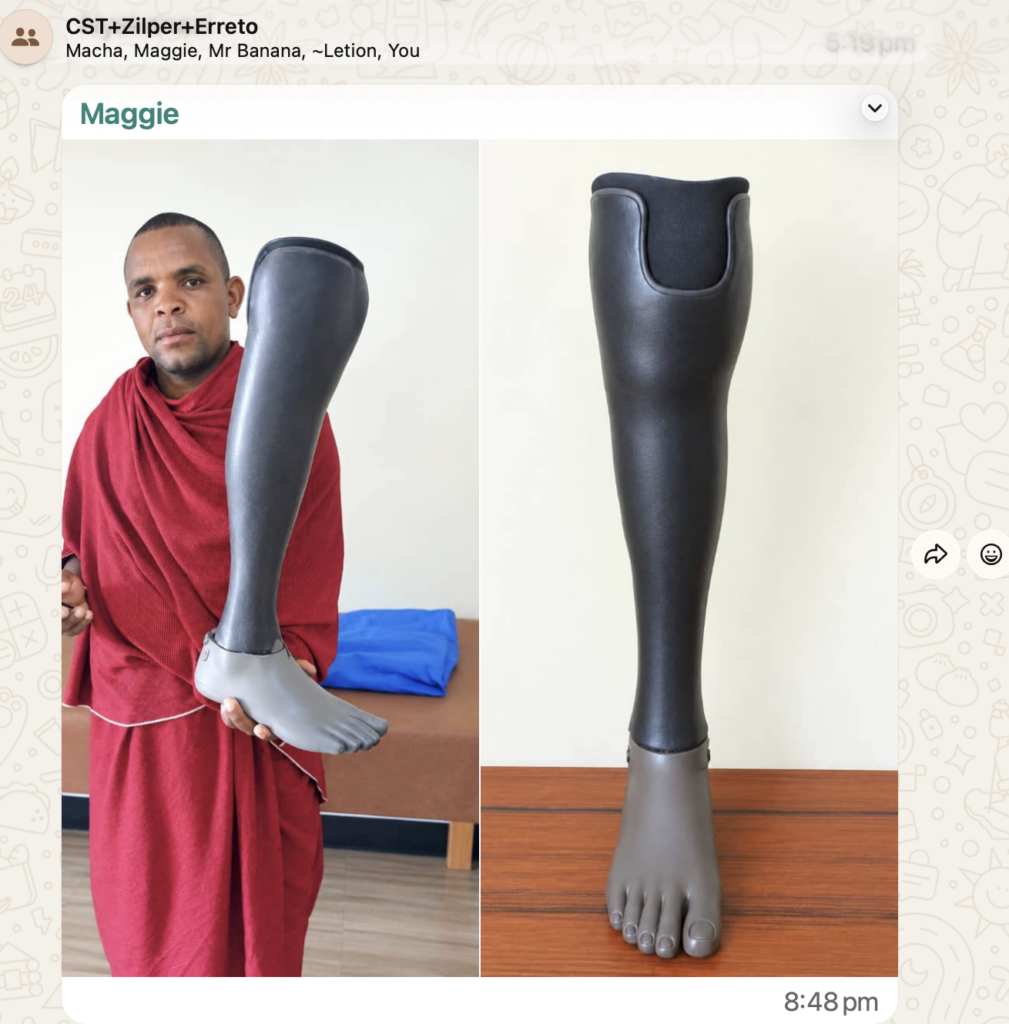
2026 replace prosthetic - other one Lobikieki grew out of
Total Donations
We fund via % of our income every month – low-cost, high-impact, safe, local, family-permissioned, life-changing surgeries when no other satisfactory option for the child, is available to the family, due to poverty.
Trained surgeons. No one religion, no politics. No further intervention after this one magic life-changing moment.
1. Work is referred between business
2. Instead of fee, sponsor surgeries
3. Client sign up and work done
4. Paid and %$ go to child surgeries
5. %$ sits in morechildsurgeries a/c
6. Child found who needs surgery
7. Child video to morechildsurgeries
8. Agree to fund child surgery
9. Child to Diagnosis – Video
10. Child to Surgery fix – Checklist
11. Child to Village – Aftercare video
12. We Verify & Pay Medicals
So how do I start, for free, to see if it's real?
If you’re curious and want to get started, one way to understand it is to go and see it.
Parts of Africa are very accessible, Tanzania, for example. Safari, the Serengeti, something extraordinary. And while you’re there, you might visit a hospital, a school, a village. Just observe. Just take it in.
And the emotional payoff of a visit shouldn’t be underestimated. There is nothing quite like seeing a child you know by name – a child you first met in pain, too sick for school, uncertain future – now running around, back in class, wearing what seems like a permanent enormous smile. That image stays with you forever. It’s what drives you in the harder moments, when the complexity feels heavy and something easier is tempting. The power of seeing is real.
But that can feel like a big step.
So I wouldn’t start there.
I’d start simply.
Join a WhatsApp group. We’ve got plenty. Your privacy is respected. Stay for as long as you want and drop off anytime or do as I do full on, pause leave for others and then return when I can and want to.
Real-time communication channels connecting outreach workers in the field, doctors in the hospital, rehab nurses, and donors. Day to day you see the conversations, the receipts, videos before and after surgery, diagnosis checklists, parent permissions. The actual work, unfiltered. You just watch. You learn. You get a feel for it. It’s better than Netflix!
Over time, you might ask a question. Offer a thought. Maybe help a little. Like any aid, some you may miss the mark — no probs, we were all newbies one time – but with persistence and an open mind, your involvement will begin to have a positive multiplier effect on the children and on your own family and most importantly on you.
Money $
It’s not just about money. Money matters, of course, it’s a real driver – but so does perspective. A simple idea, a different way of looking at something, maybe a bit differently, can be genuinely useful.
And over time, if you stay around, you start to know the people. The health workers. The doctors. Their families. Their motivations. You begin to feel of real value – because….. you are of real value.
That’s what’s kept me involved. Connection to real humans and what they’re doing.
For me it’s become three things: helping more children get surgery and better outcomes; supporting the people on the ground who help them; and being part of something slowly becoming more sustainable.
Right now some are out of a mud hut – and the fact it exists at all is a wonderment to me. But the goal is a modest, modern Level 1/2 hospital: not extravagant, but properly funded, properly staffed, and secure enough that its future is a yearly budgetary discussion rather than a daily existential one. A facility wide enough to treat basic ailments (a trained doctor, we have 33 times more doctors in Australia) before they become life-threatening, connected enough to refer what’s beyond their scope up the medical chain, and focused enough on education and prevention that fewer children need to come through the door in the first place.
I’ve seen real improvement, even in just the last five years. My family is a very small part of it – but things overall are moving forward, and that feels good for everyone involved.
That’s how I started. Just watching. Then slowly getting involved.
If you’d like to do the same, I’m happy to point you in the right direction. Details below, or reach out to Lightness and Batro directly – the Chairperson and CEO of Child Surgeries Tanzania, a substantial NGO who can help you understand the work and connect you across many different parts of the child surgery process. A donation is welcome – but honestly, I wouldn’t start there. Build your knowledge first, get a feel for it, and then, like us, hop on for the ride.
Selian Hospital Tanzania
Child Surgeries Tanzania
Batro Ngilangwa (CEO CST)
+255 745 347 411 [email protected]
KISANGANI STREET, MWILAMVYA,
KASULU TOWN COUNCIL, KIGOMA REGION.
Melbourne Australia
Colleen and Mal – Brighton Rotary
0408 107 988 [email protected]
47 Warleigh Grove Brighton Victoria 3186